
Private Event Cinematography vs. Traditional Videography: Which Is Better For Your Legacy Moment?
Let's be real, you're only going to experience your big moment once. Whether it's your wedding day, a milestone birthday, or that anniversary celebration you've been planning for months, you need it captured right. But here's the question everyone's asking: do you want a straightforward video of what happened, or do you want a film that makes people feel something every single time they watch it?
That's the difference between traditional videography and cinematic event coverage. And trust us, it matters more than you think.
What Traditional Videography Actually Is
Traditional videography is exactly what it sounds like, documenting your event from start to finish. Think of it like a really well-done home video, but with better equipment and someone who knows what they're doing behind the camera.
A traditional videographer shows up with their camera, maybe two, and captures everything as it happens. They're recording the ceremony, the toasts, the first dance, all of it. The final product? A chronological record of your day that's clear, complete, and honest.
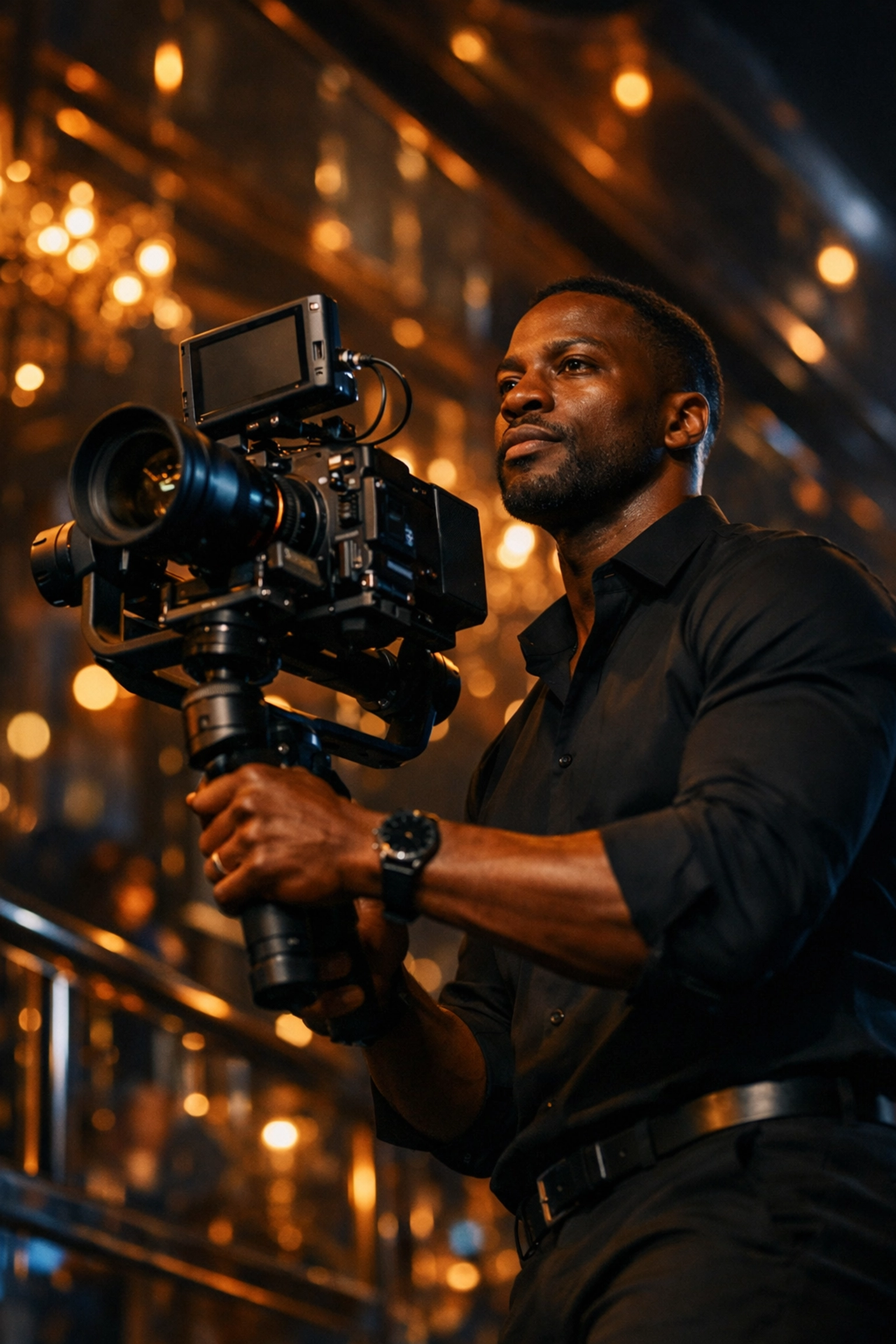
This approach has its place. You get everything that happened, nothing's left out, and the turnaround is usually quicker. For smaller gatherings or when budget is tight, traditional videography gets the job done. You'll have footage of Aunt Patricia's speech, all three hours of the reception, and every moment documented in real time.
But here's what you won't get: that movie-quality feel. The dramatic angles. The storytelling that makes your heart skip when you watch it back five years later.
The Cinematic Difference: More Than Just A Camera
Private event cinematography is a whole different game. This is where your event gets treated like a feature film.
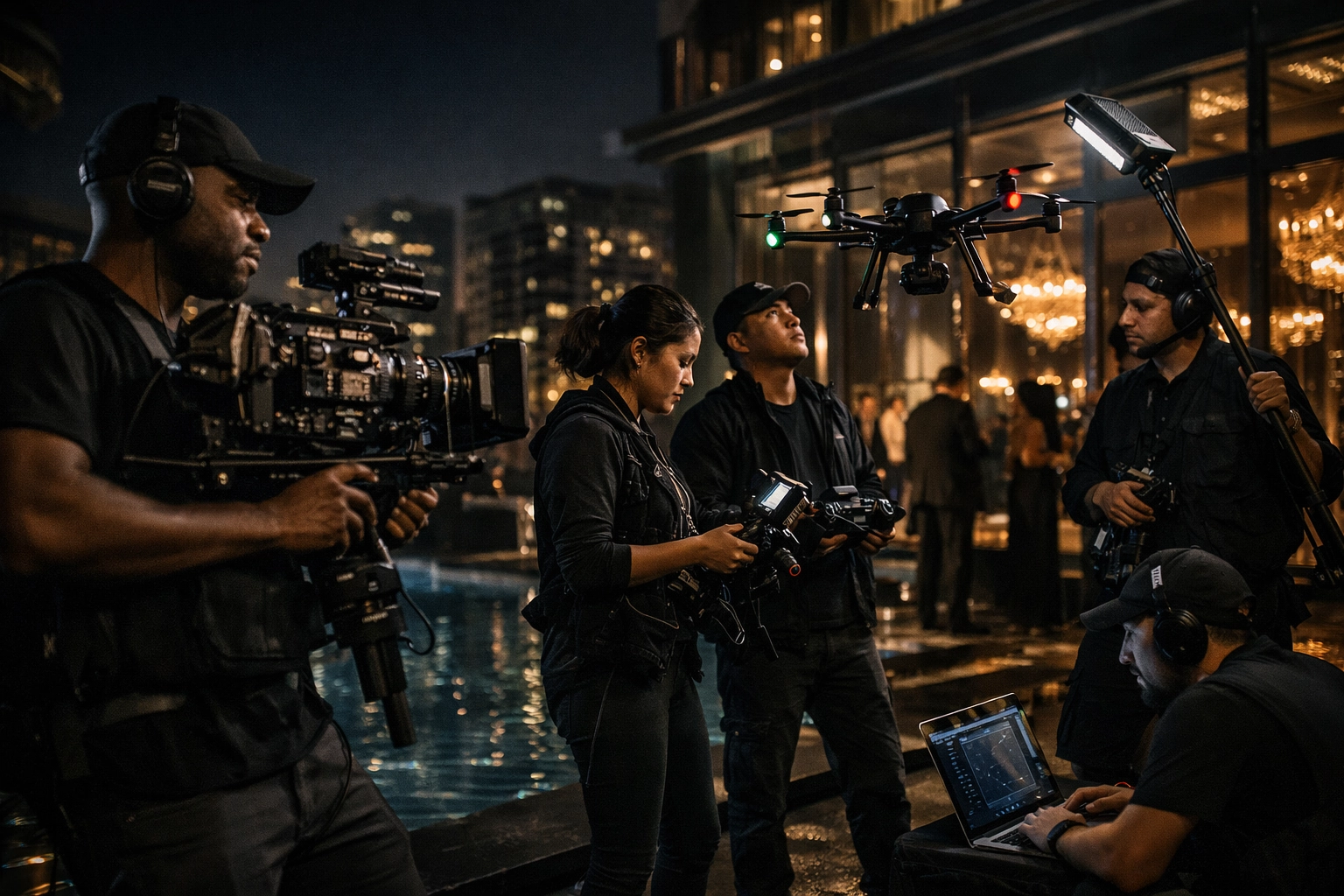
Instead of one person with a camera, you've got a full production team. We're talking multiple cinematographers, cinema-grade lenses, stabilizers, gimbals, sometimes even drones if the venue allows it. The goal isn't just to record what happened, it's to capture how it felt.
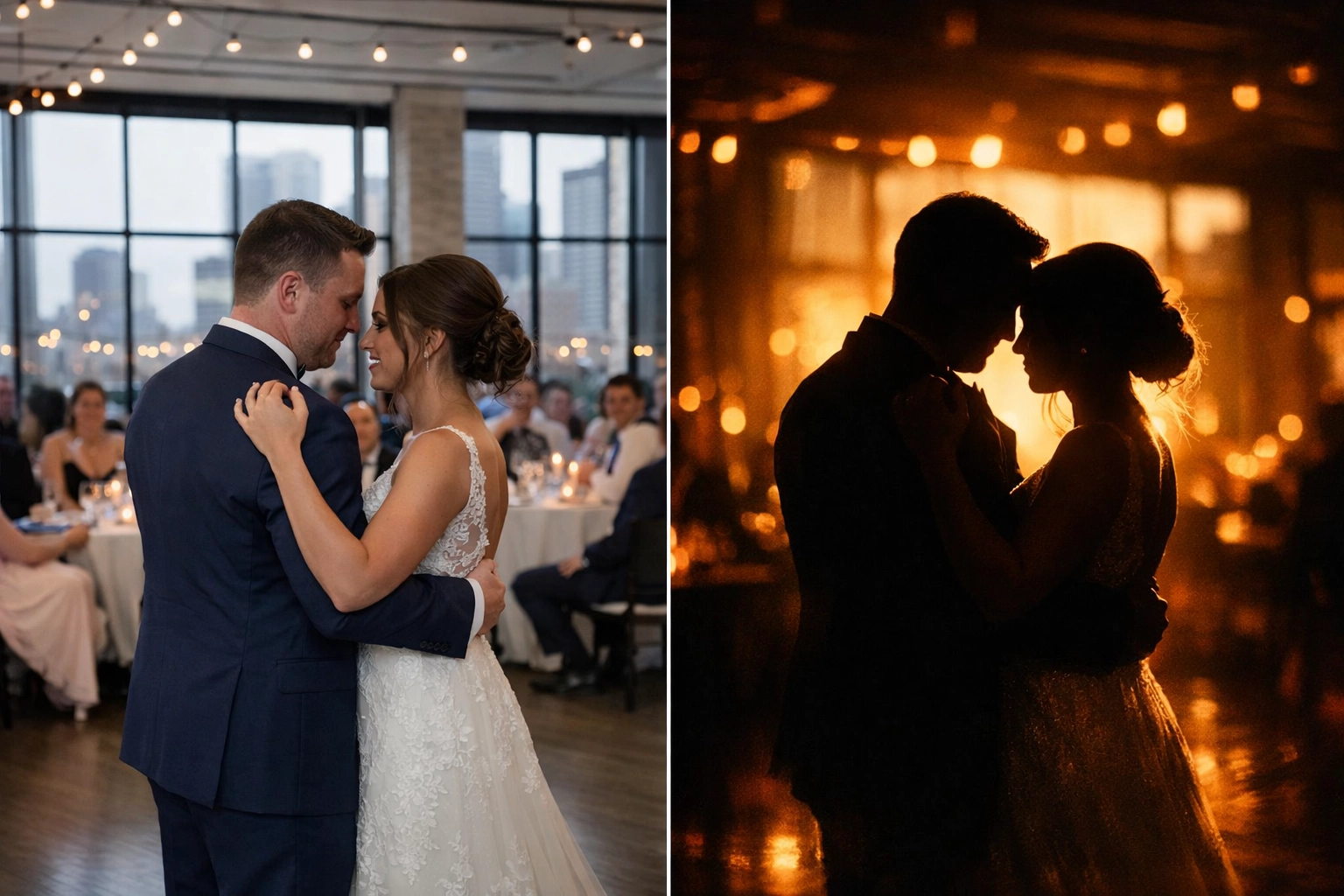
Every shot is intentional. The way the light hits your dress during the ceremony. That moment when your partner's face changes right before you say "I do." Your guests' genuine reactions when they see the venue for the first time. These aren't accidents, they're carefully crafted moments that tell your story.
And then there's post-production. Color grading transforms your footage into something with real depth and atmosphere. Rich contrast, cinematic tones, the kind of visual quality that makes you forget you're watching a wedding video and feel like you're watching something that could be in theaters.
Breaking Down The Real Differences
The Investment
Let's talk money because it matters. Traditional videography typically runs between $500 and $1,000 for most events. It's straightforward, no frills, and budget-friendly.
Cinematography? That's a bigger investment. You're looking at significantly higher costs, but you're also getting a full production team, advanced equipment, and extensive post-production work. Think of it less like hiring a videographer and more like commissioning a piece of art that happens to be about your life.
The Timeline
With traditional videography, you'll usually get your video within a few weeks. It's faster because there's less editing involved, they're mainly cutting out dead space and organizing footage chronologically.
Cinematic productions take longer. We're talking weeks to months, depending on the scope of your event. That's because every frame gets attention. Color grading alone can take days. But the wait? Worth it when you see the final product.
The Feel
Here's where it really hits different. A traditional video lets you relive your day exactly as it happened. You can watch the whole ceremony, hear every word of every speech, see everything in order.
A cinematic film makes you feel the day all over again. The pacing, the music, the way scenes flow together, it's emotional storytelling. This is what gets shared across generations. This is what your grandkids will actually want to watch.
Who Needs What?
Go With Cinematography If:
You're hosting a large-scale event with 300+ guests where multiple stories are happening simultaneously. You want something you can show for years that still feels fresh and emotional. Your vision includes that luxury film aesthetic, think movie premiere, not family reunion DVD. And yes, you've got the budget to make it happen.
Cinematography is perfect for weddings where every detail matters, milestone celebrations that deserve premium treatment, and corporate events where brand image is everything. It's for the clients who understand that great content is an investment, not just an expense.
Traditional Videography Makes Sense When:
Your event is intimate and you want a complete, honest record of everything. Budget is a priority and you need to keep costs manageable. You value completeness over artistic flair. Or you simply want your footage fast without waiting for extensive post-production.
This works well for smaller family gatherings, anniversary parties, or events where documentation matters more than production value.
The Legacy Factor
Here's the thing about legacy moments: they're called that for a reason. These aren't just events. They're the stories your family will tell, the memories that define chapters of your life, the moments that matter decades from now.
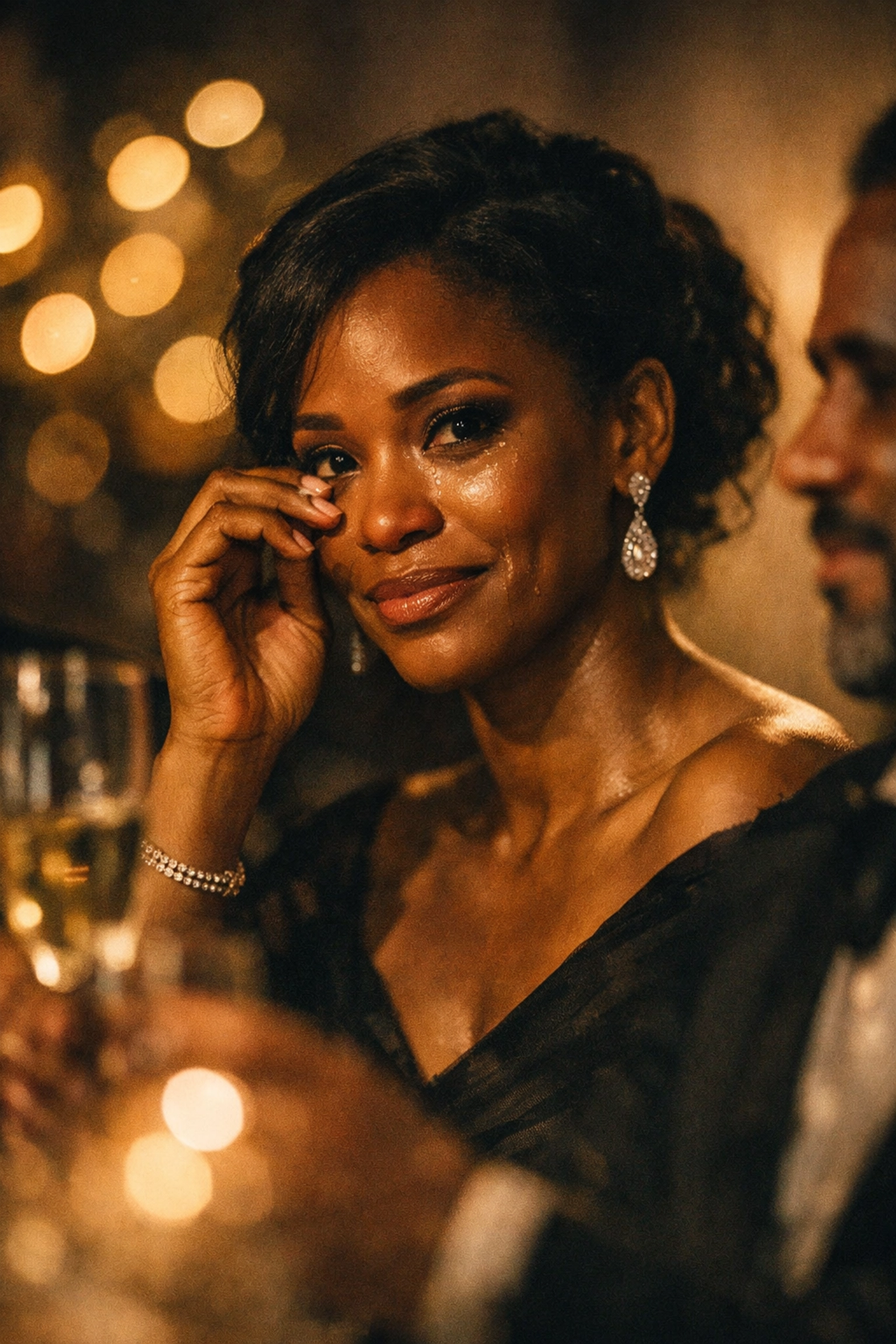
A traditional video captures what happened. A cinematic film captures why it mattered.
When you're planning something significant, you have to ask yourself: what do I want this to look like in twenty years? Do I want a document, or do I want an experience?
Making Your Choice
There's no wrong answer here. Both approaches have value, and the right choice depends on what matters most to you.
If you're planning an event where every detail is curated, where the ambiance and emotion matter as much as the logistics, cinematography makes sense. You're not just hosting an event: you're creating an experience that deserves to be captured with the same level of intention you put into planning it.
But if you need straightforward documentation without the premium price tag, traditional videography will serve you well. You'll have your footage, your memories, and your peace of mind.
What We Bring To The Table
At Black Box Entertainment & Hospitality, we specialize in that cinematic approach because we understand what's at stake. Your events aren't just parties: they're investments in memories, in legacy, in the stories your family will tell.
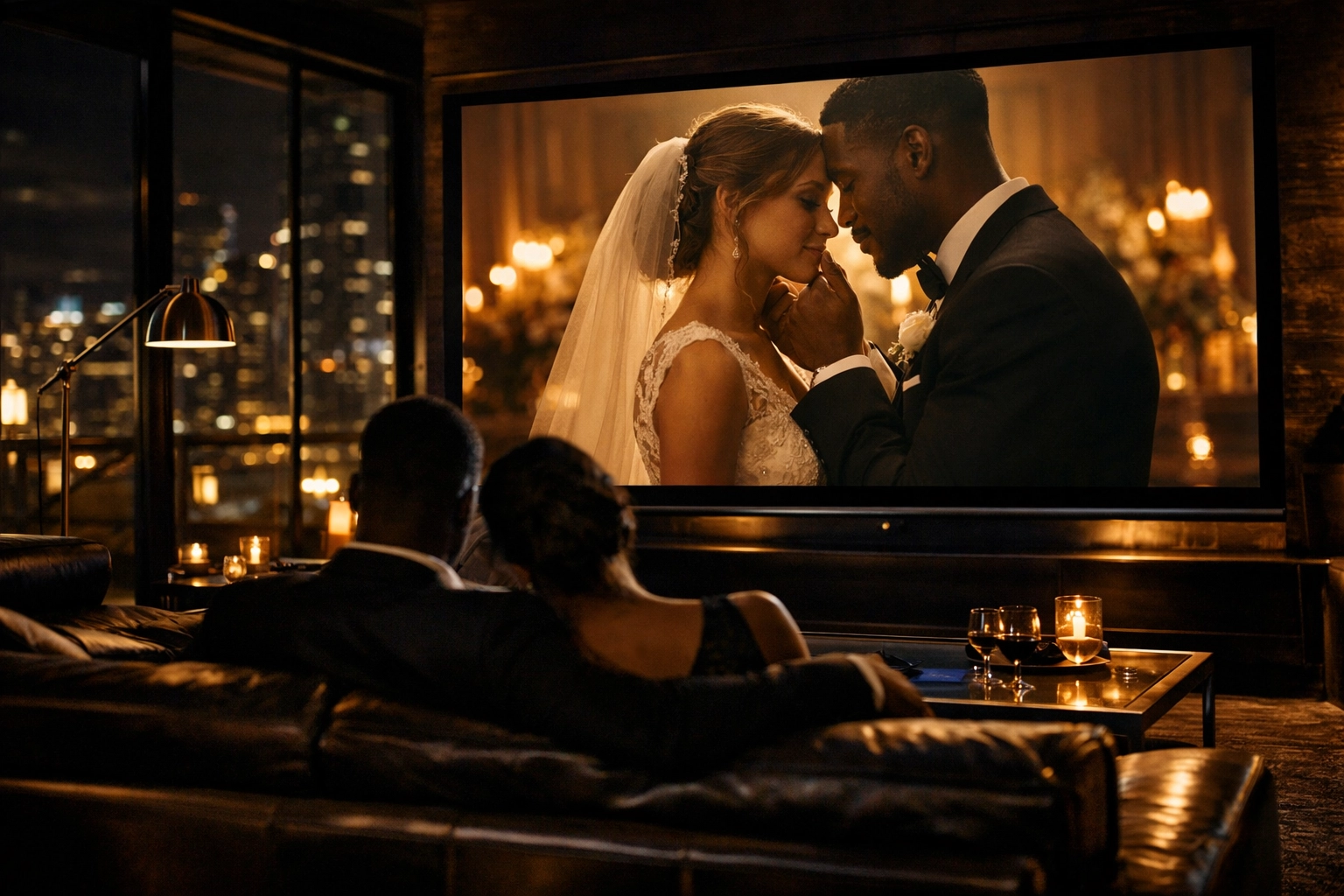
Our cinematography team treats every project like it matters. Because it does. We're capturing the moments you'll want to relive, the emotions you'll want to remember, the details that made your event uniquely yours.
We use cinema-grade equipment, professional lighting, and that editorial-style approach that turns events into films. But more than that, we understand how to tell your story in a way that hits right: every single time someone watches it.
The Bottom Line
Your legacy moment deserves more than just documentation: it deserves to be told. Whether that's through traditional videography or full cinematic production depends on your vision, your budget, and what you want this memory to become.
But if you're reading this and thinking "I want something special," you already know which direction to go.
Ready to turn your event into a film worth watching? Let's talk about what's possible.
Comments